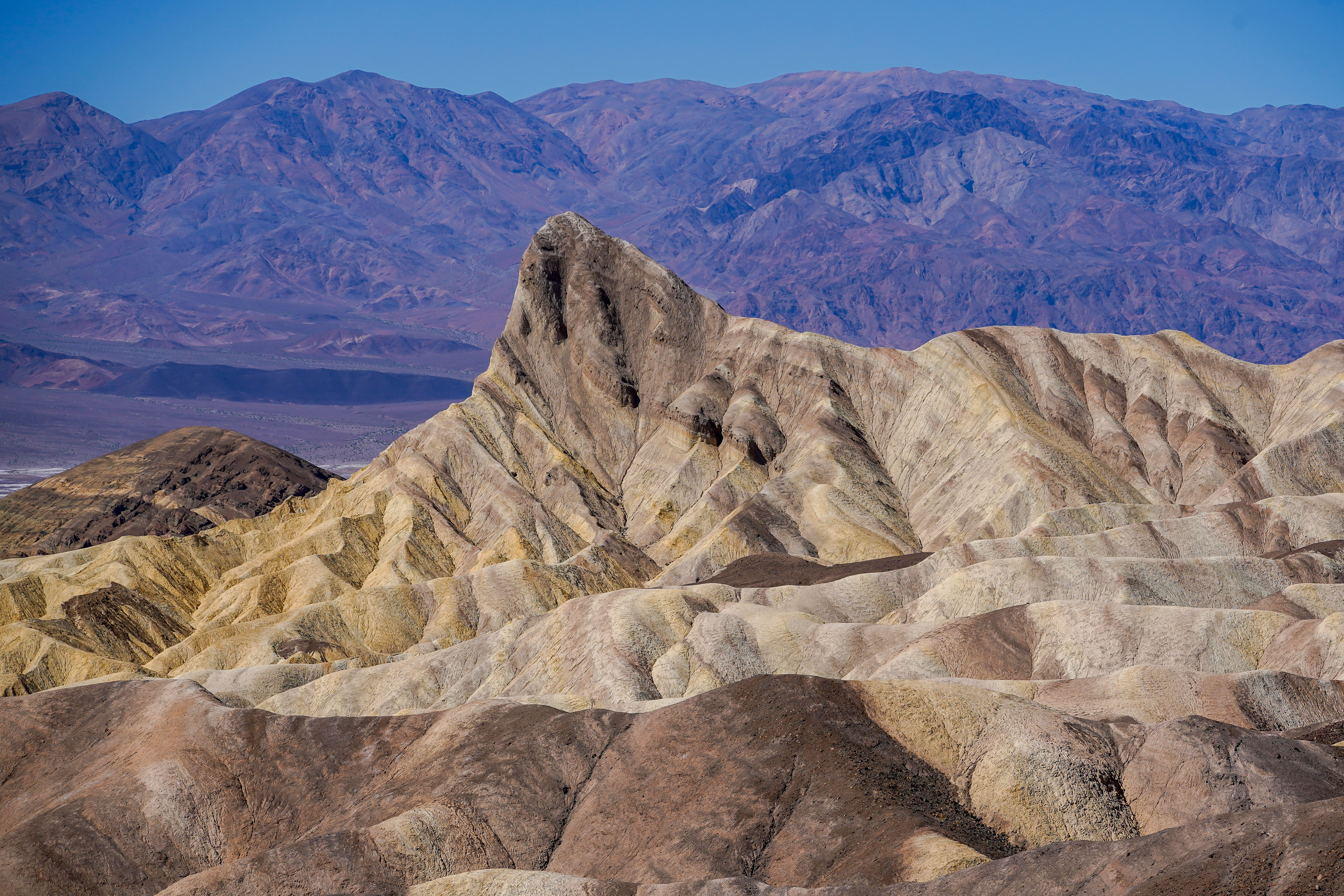
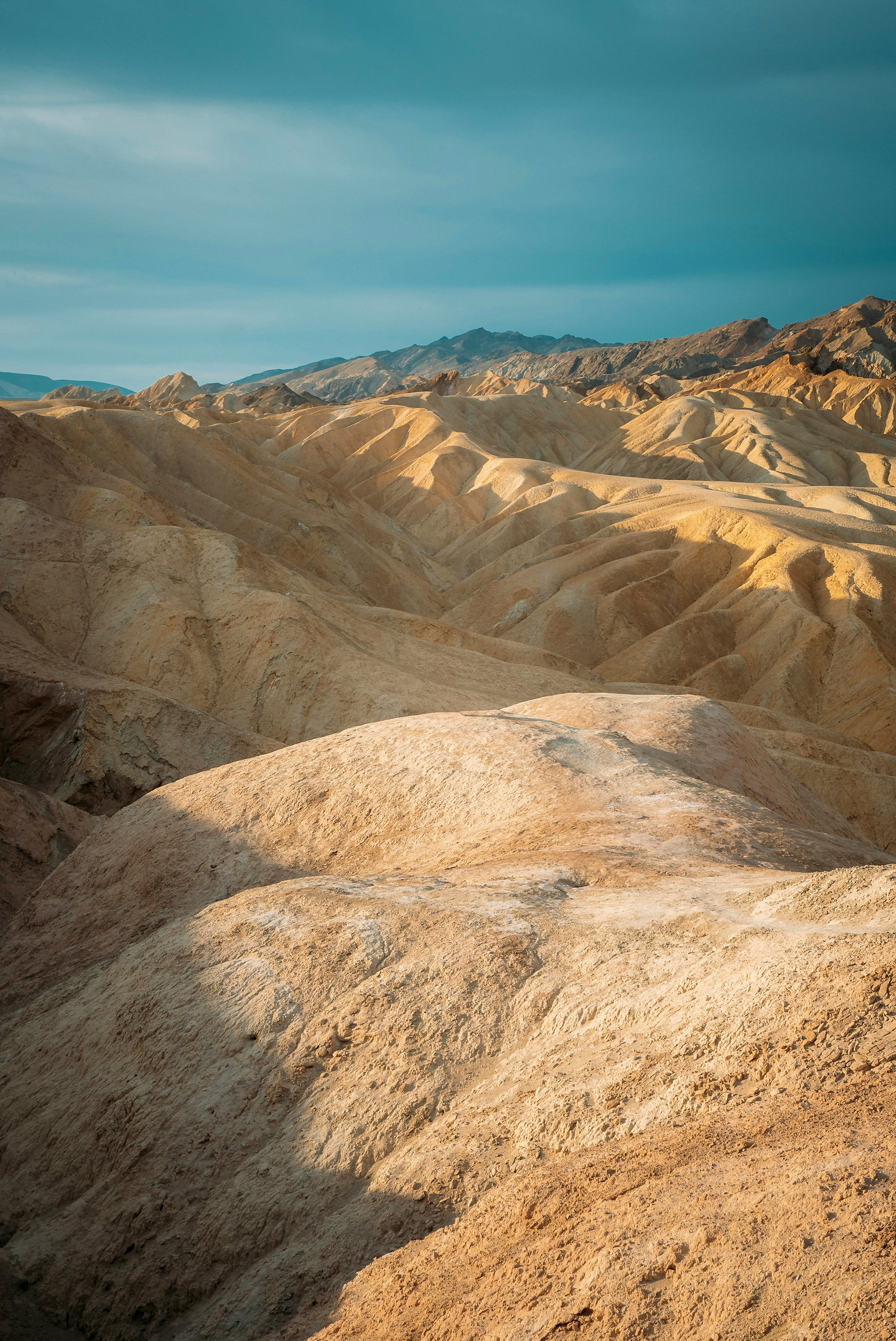
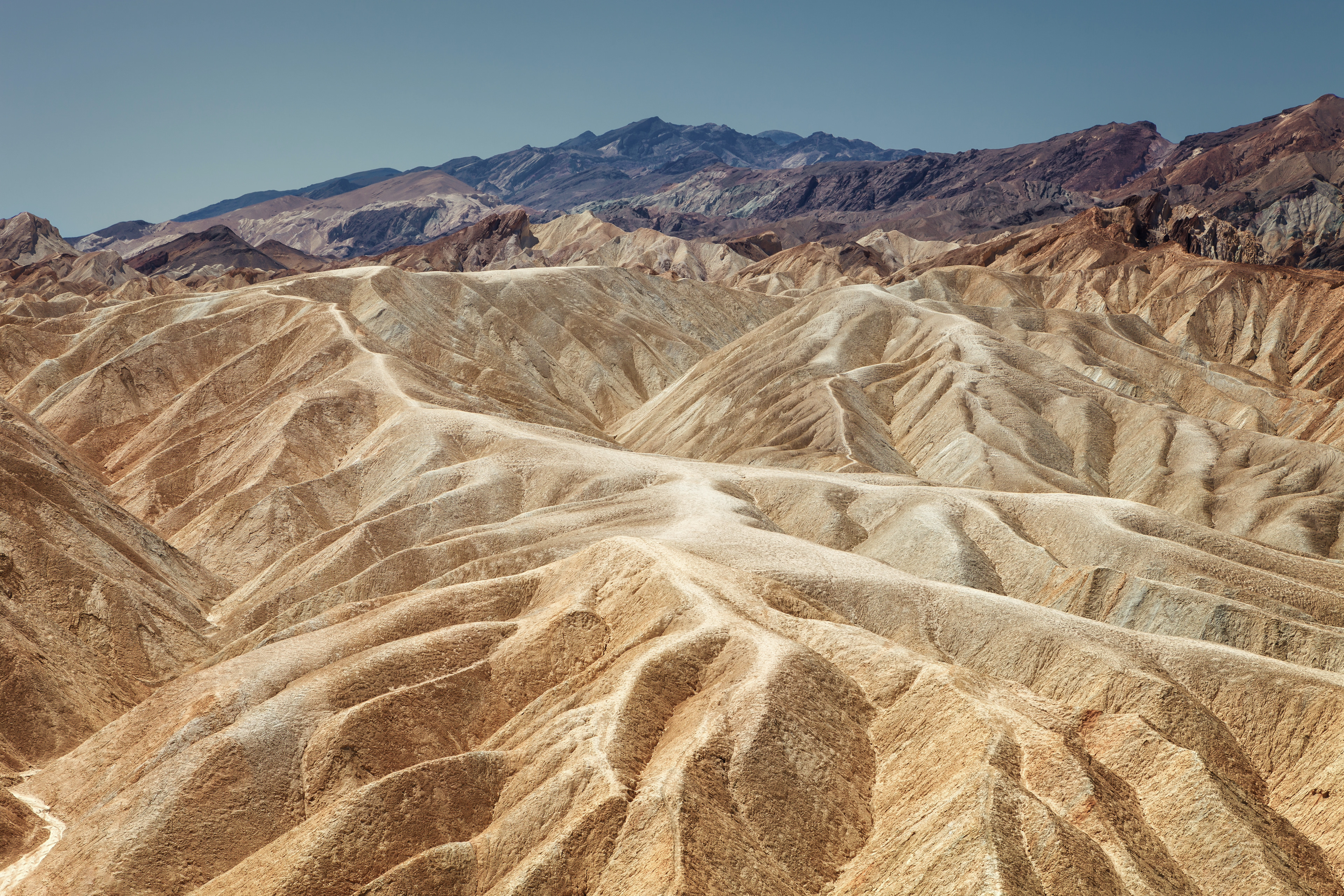
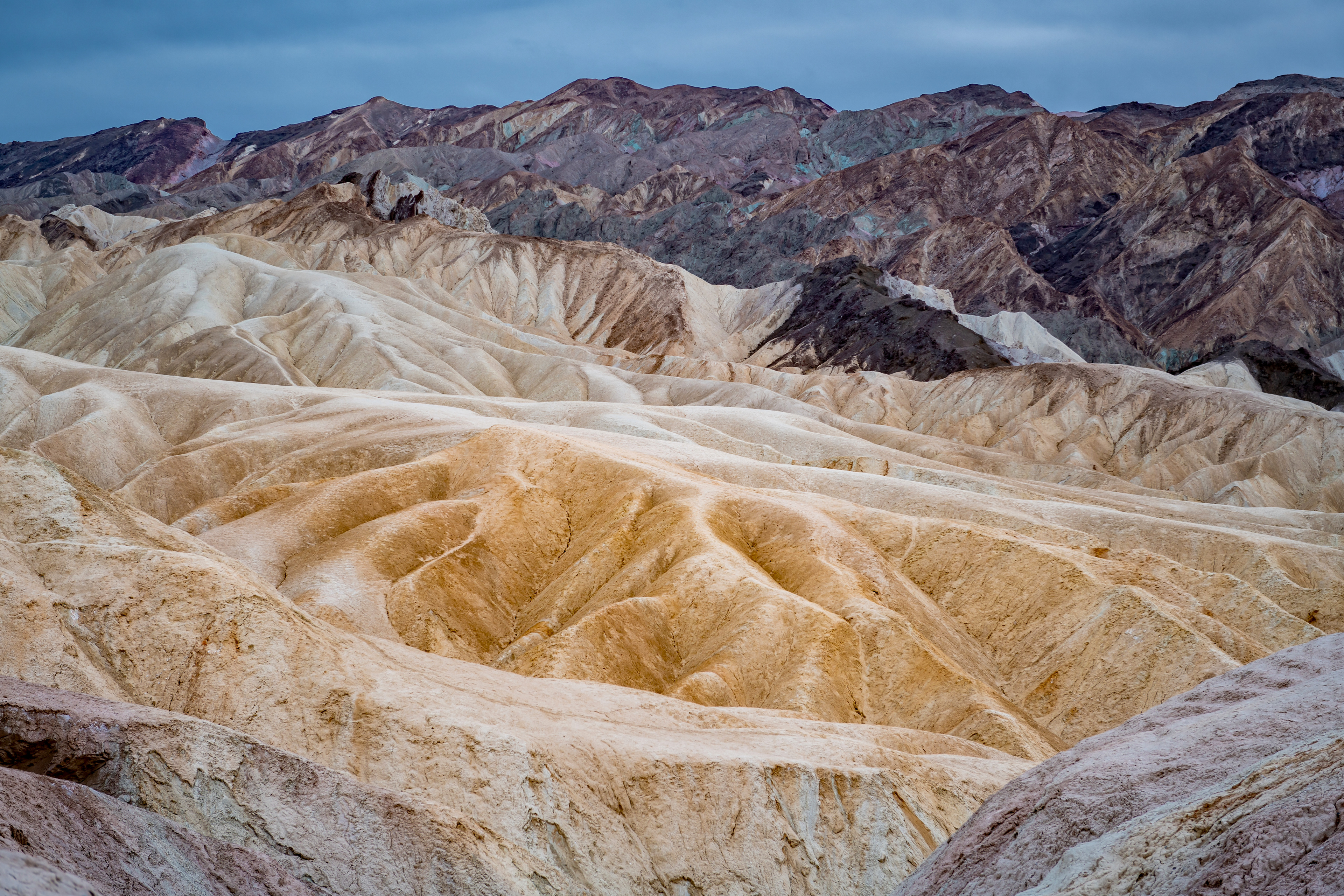
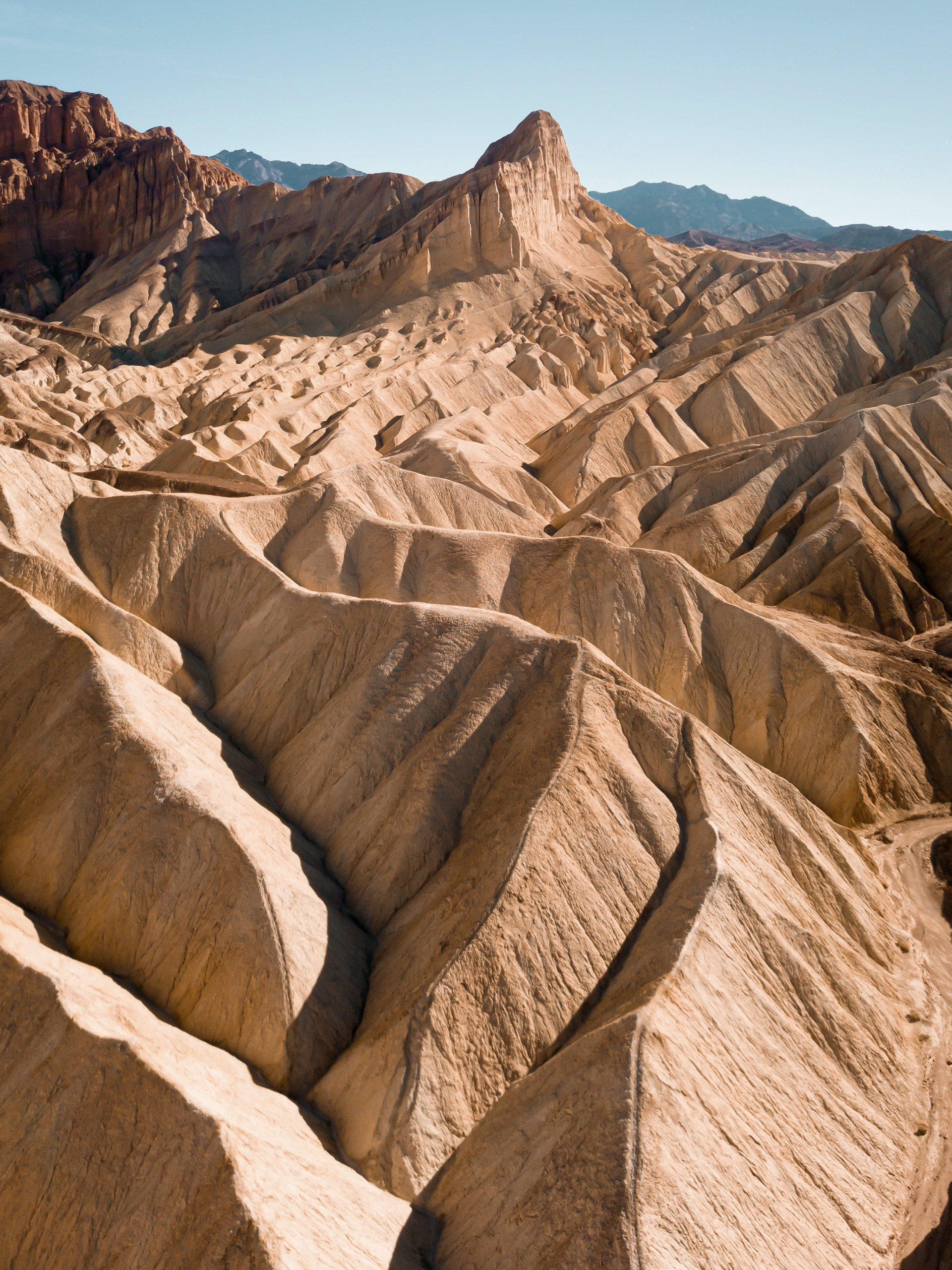
Zabriskie Point, Death Valley National Park,USA
Death Valley’s geological story stretches back more than a billion years, beginning with ancient metamorphic rocks forged deep within the Earth. Over time, the region shifted from mountain ranges to warm, shallow seas that deposited thick layers of limestone, sandstone, and mudstone. As tectonic forces intensified during the rise of the Sierra Nevada and other western ranges, the crust folded, faulted, and later thinned, giving way to widespread volcanic activity that scattered ash and lava across the landscape. Over the last few million years, the Basin and Range Province began stretching apart, causing massive blocks of land to drop and rise along faults—forming the deep Death Valley trough and the towering Panamint Mountains beside it.
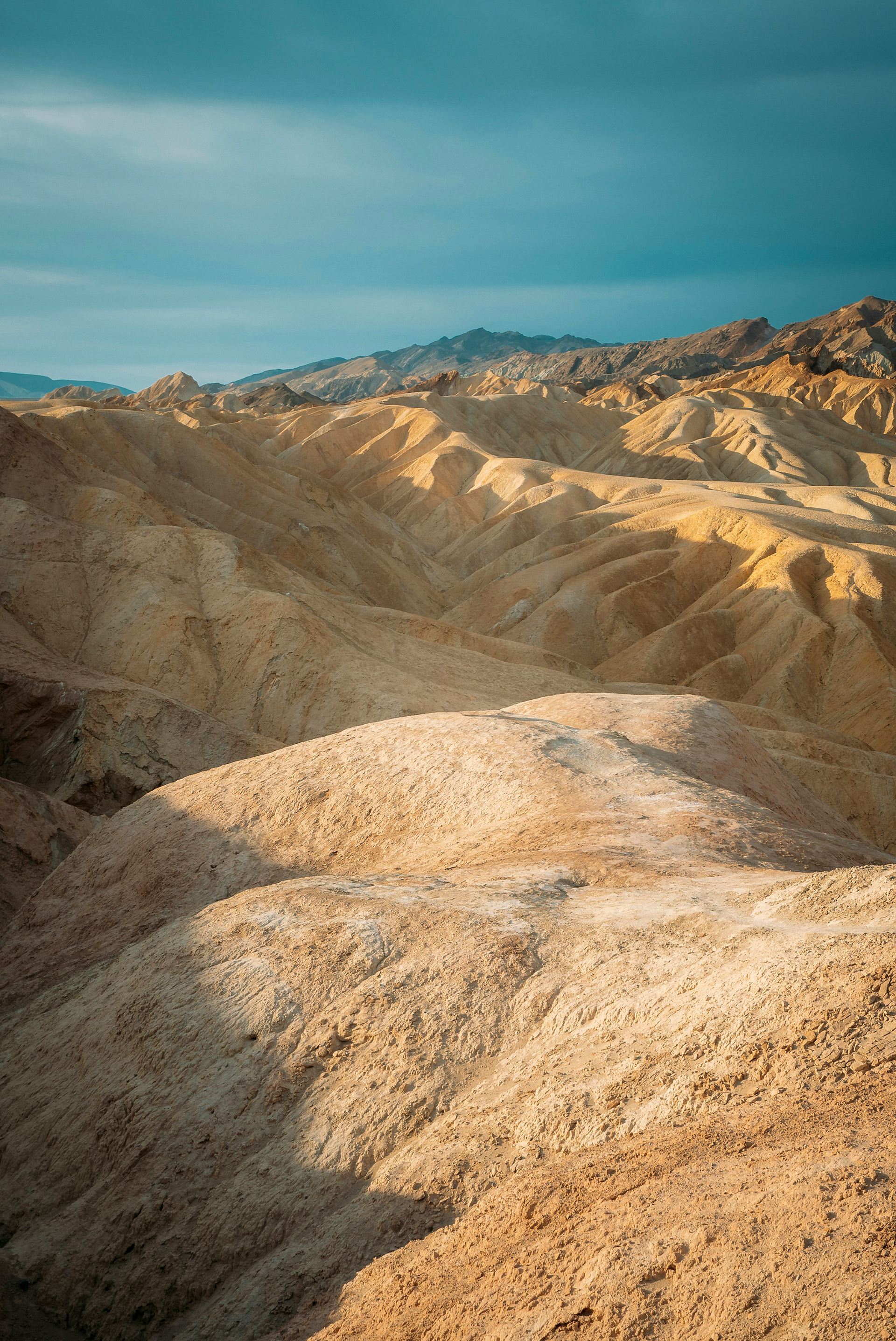
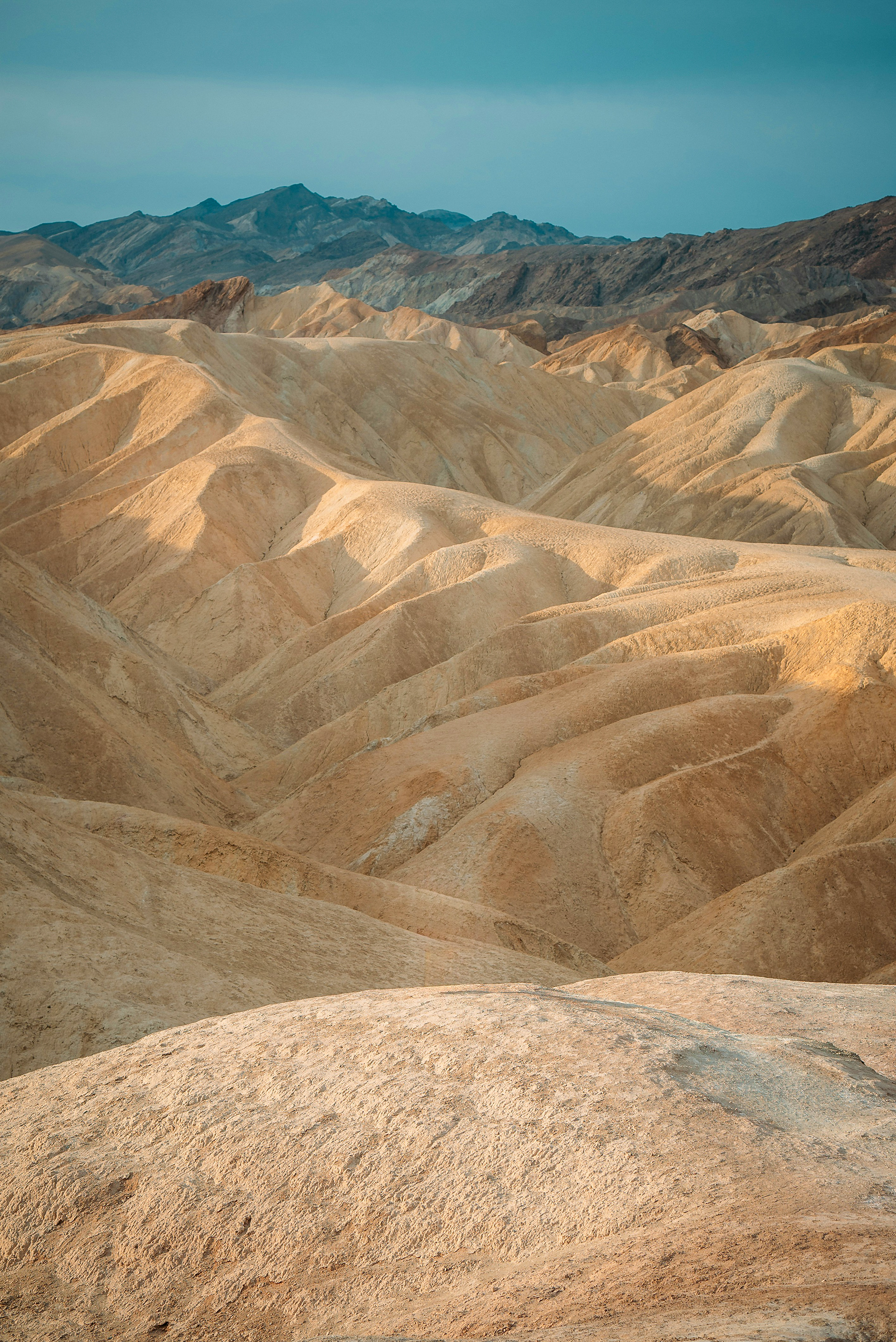
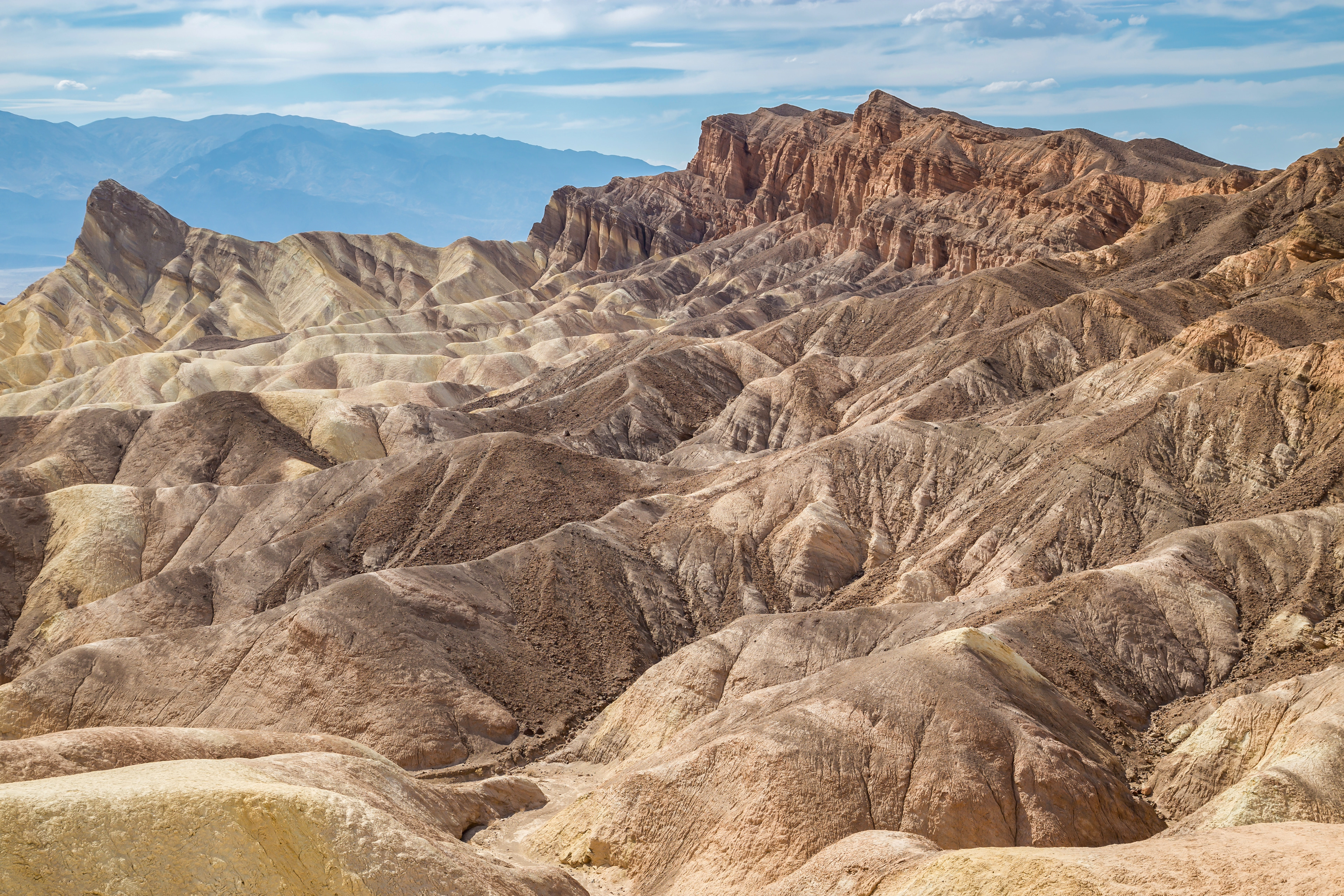
Zabriskie Point feels like a landscape caught between breath and becoming. The ridges rise like quiet intentions, the valleys fall like unspoken truths, and the light drapes itself across the terrain with the softness of understanding. It’s a place where the Earth seems to pause—not in stillness, but in awareness—inviting you to witness the subtle, ongoing act of creation
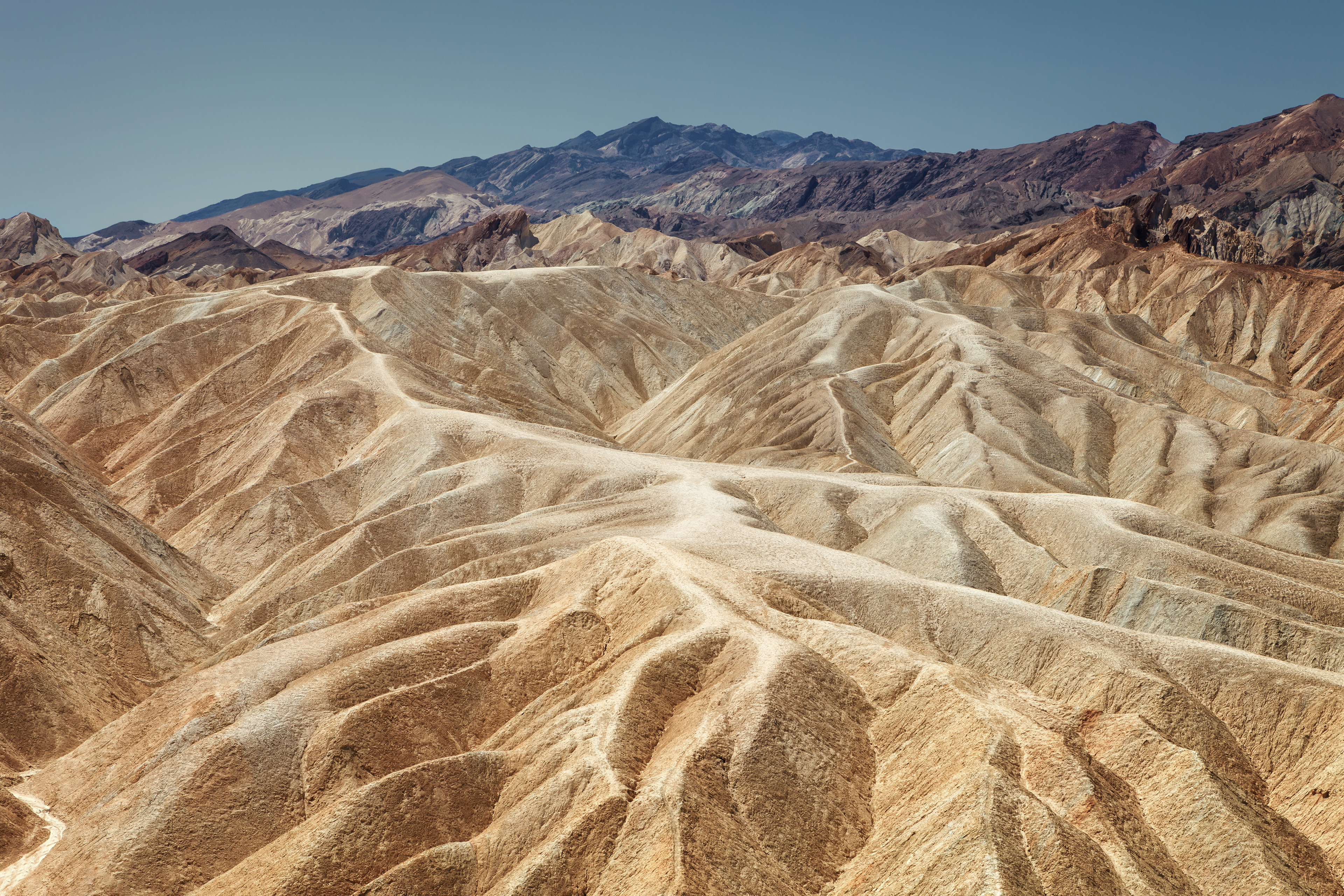
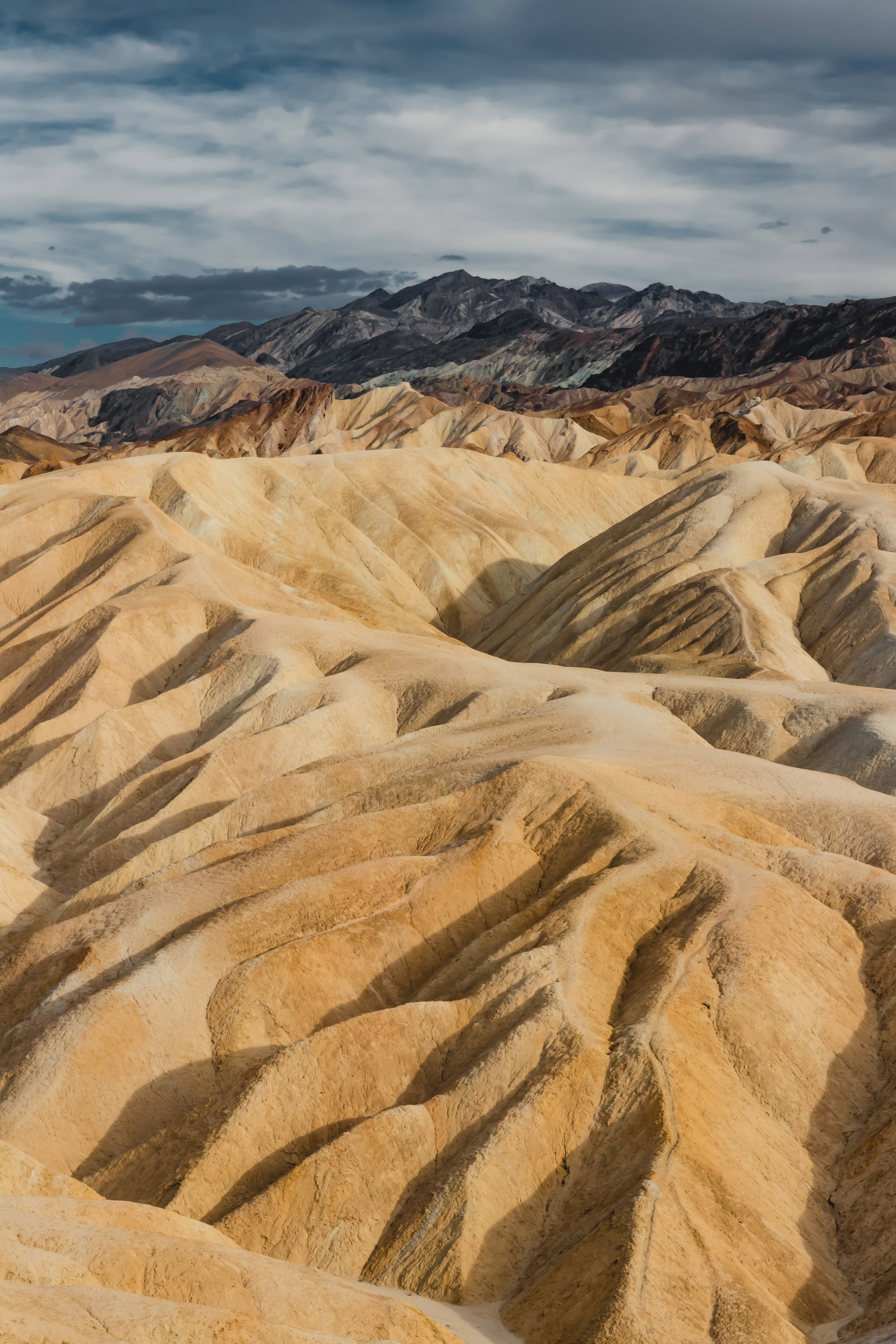
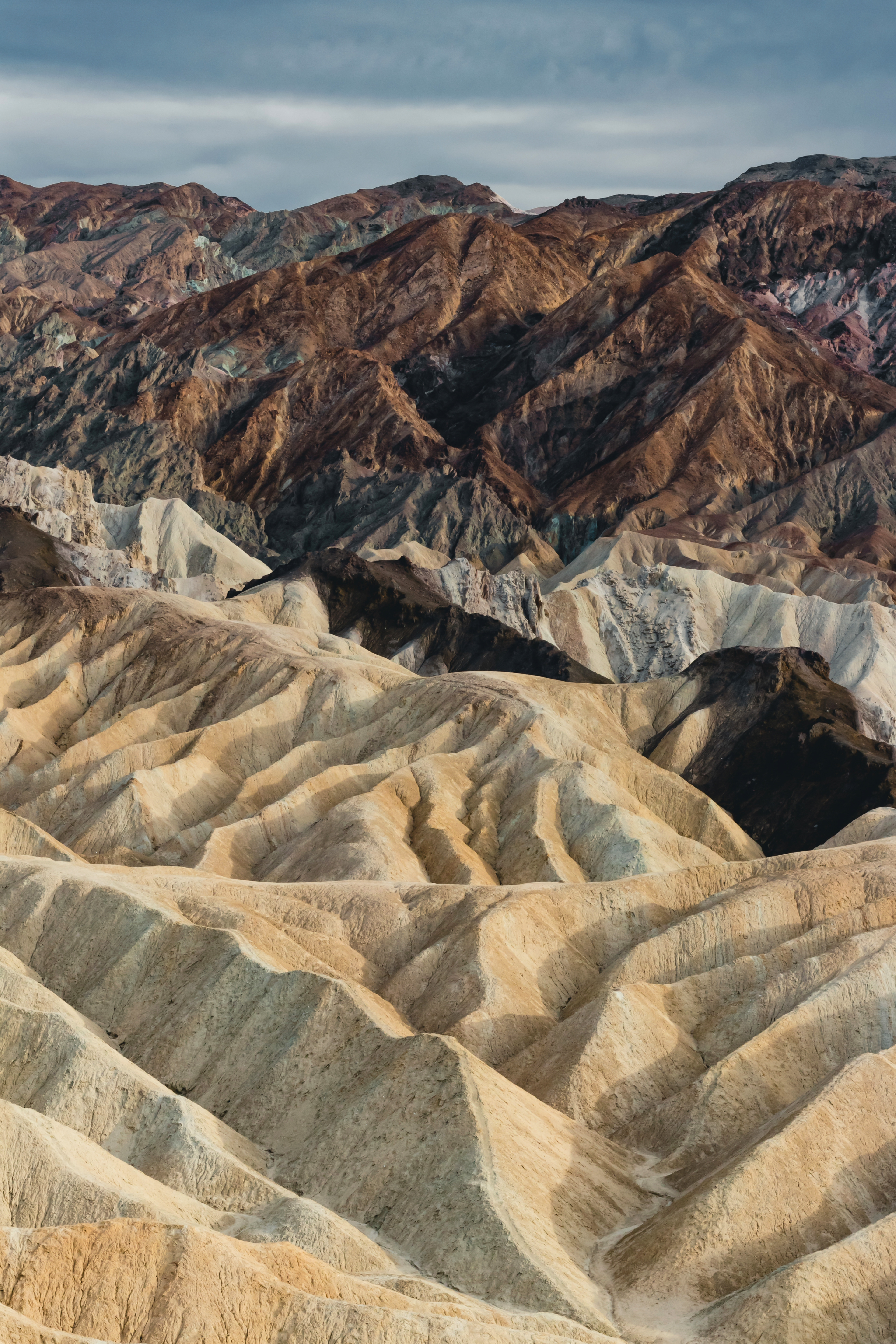
As the sun dips, the land shifts again—shadows lengthen, colors deepen, and the desert exhales. Zabriskie Point becomes a study in dusk, a place where the day’s last light lingers like a secret. It’s a moment that feels both fleeting and eternal, a perfect pause before the night claims the horizon.
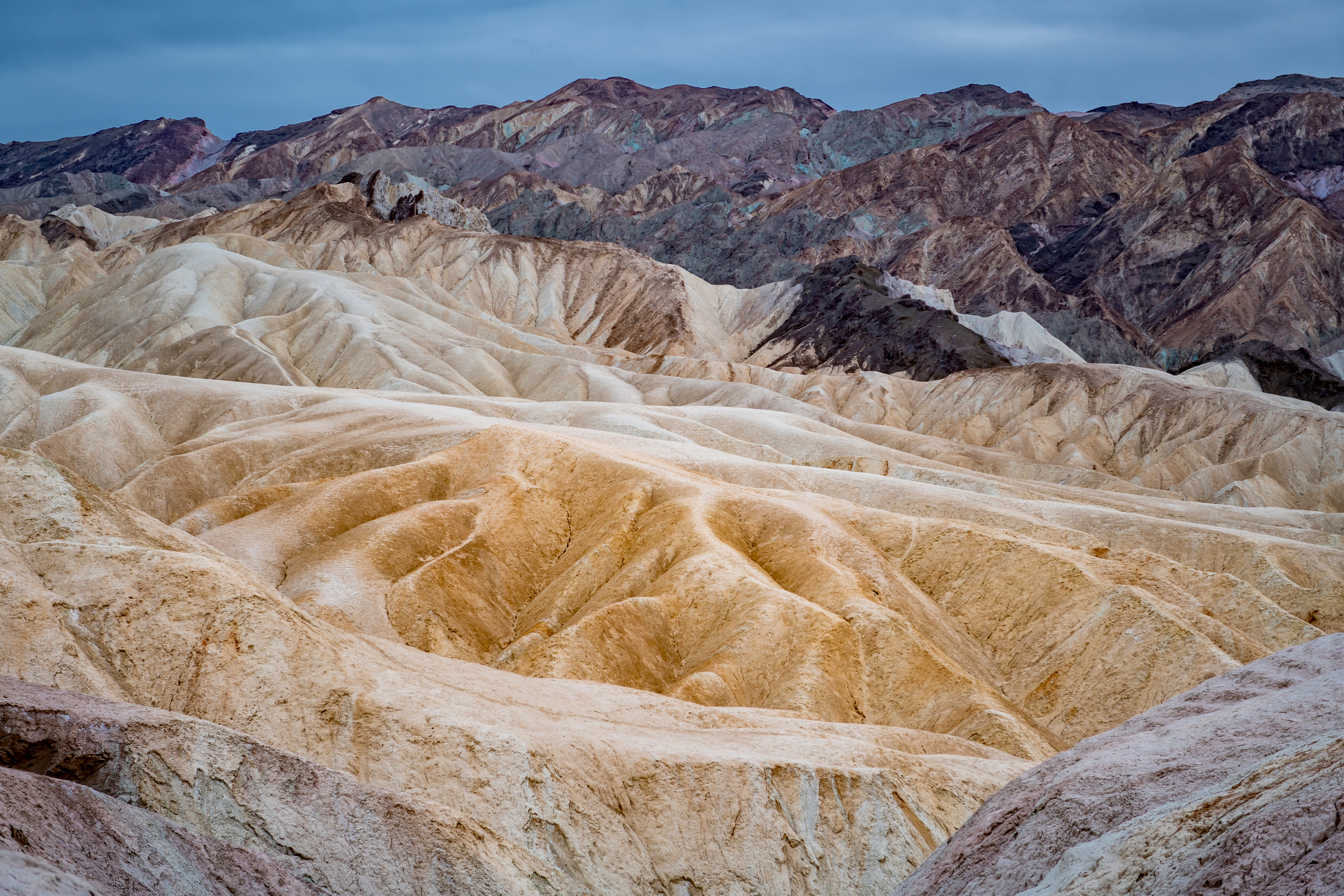
There’s a quiet defiance in this landscape. It has endured heat, wind, erosion, and time—and still it stands, sculpted but unbroken. Zabriskie Point is a portrait of persistence, a reminder that beauty often comes from surviving what was never meant to be gentle.
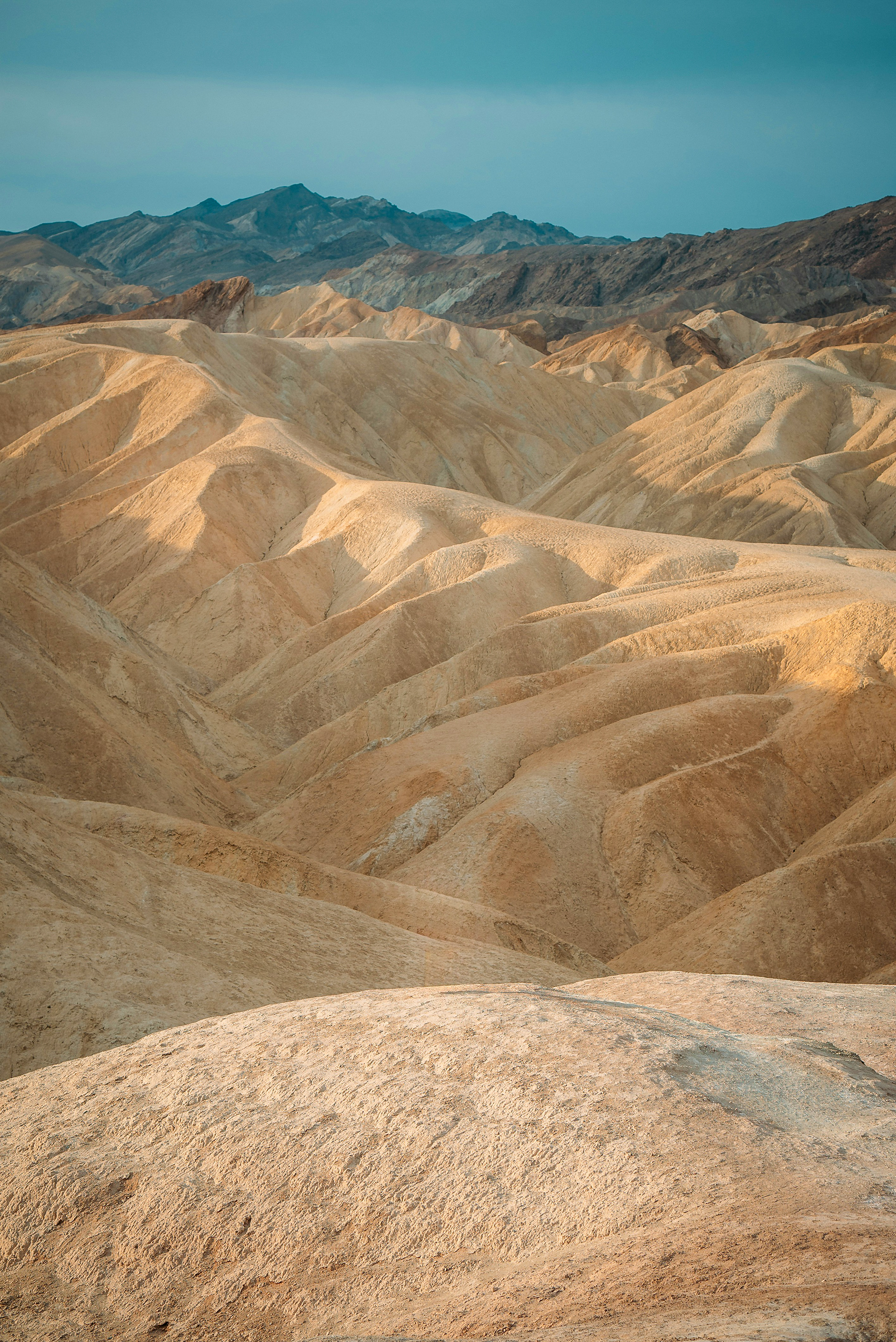
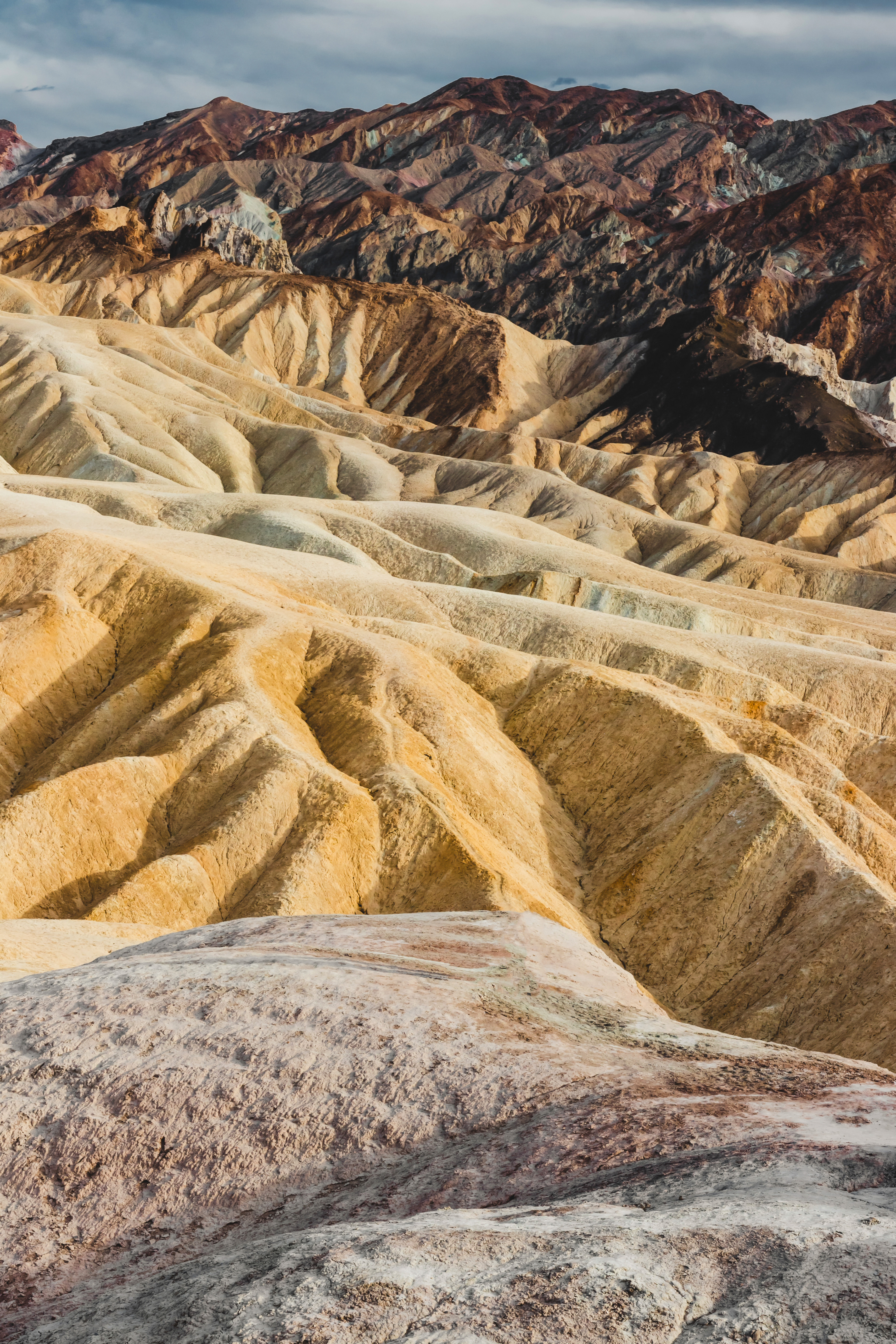
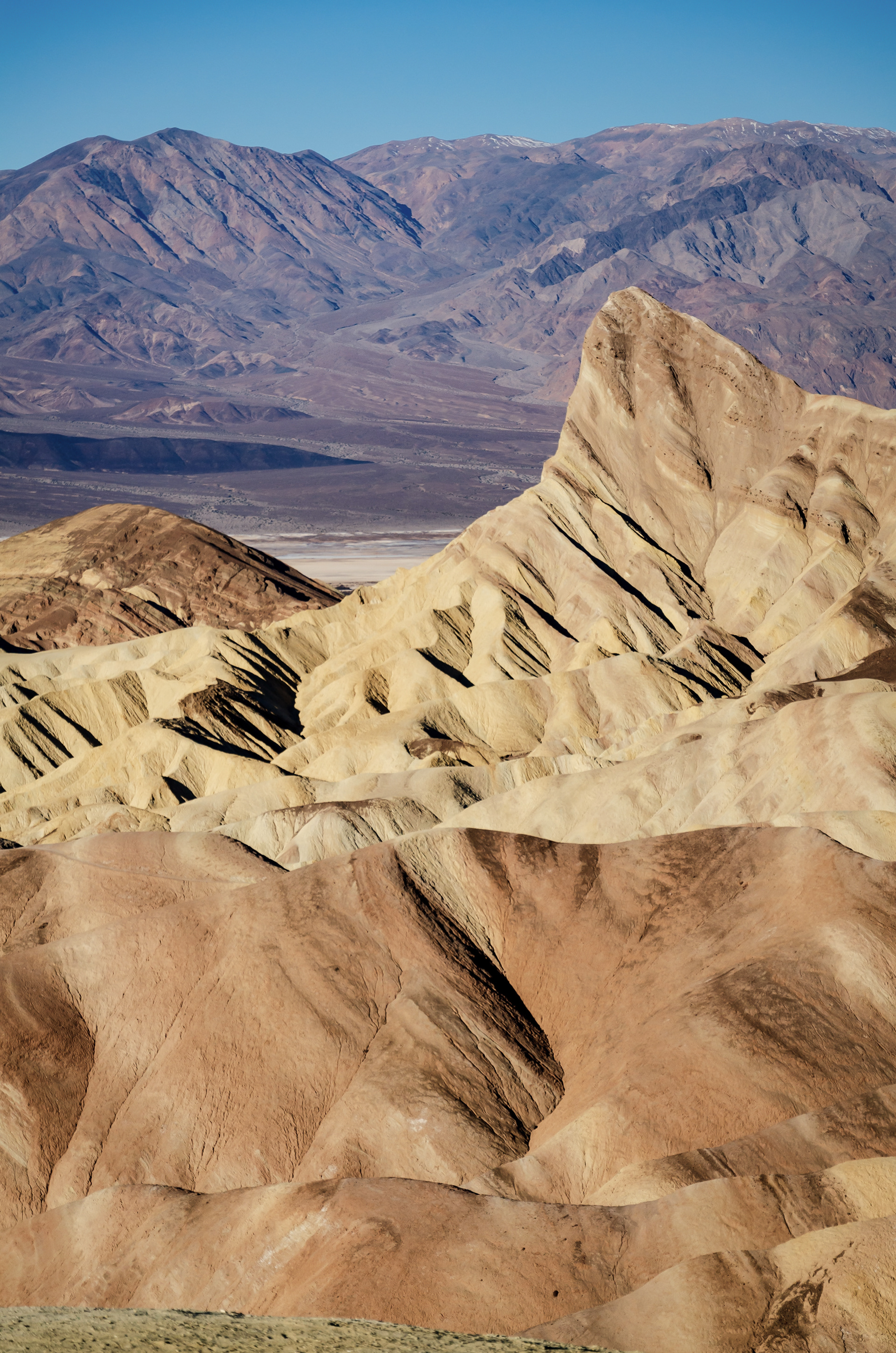
As the sun climbs, the shadows retreat and the landscape reveals its full architecture. The ridges resemble pages in a book written by erosion, each layer a chapter of geological memory. Zabriskie Point is less a viewpoint and more a library of time, open to anyone willing to read slowly.
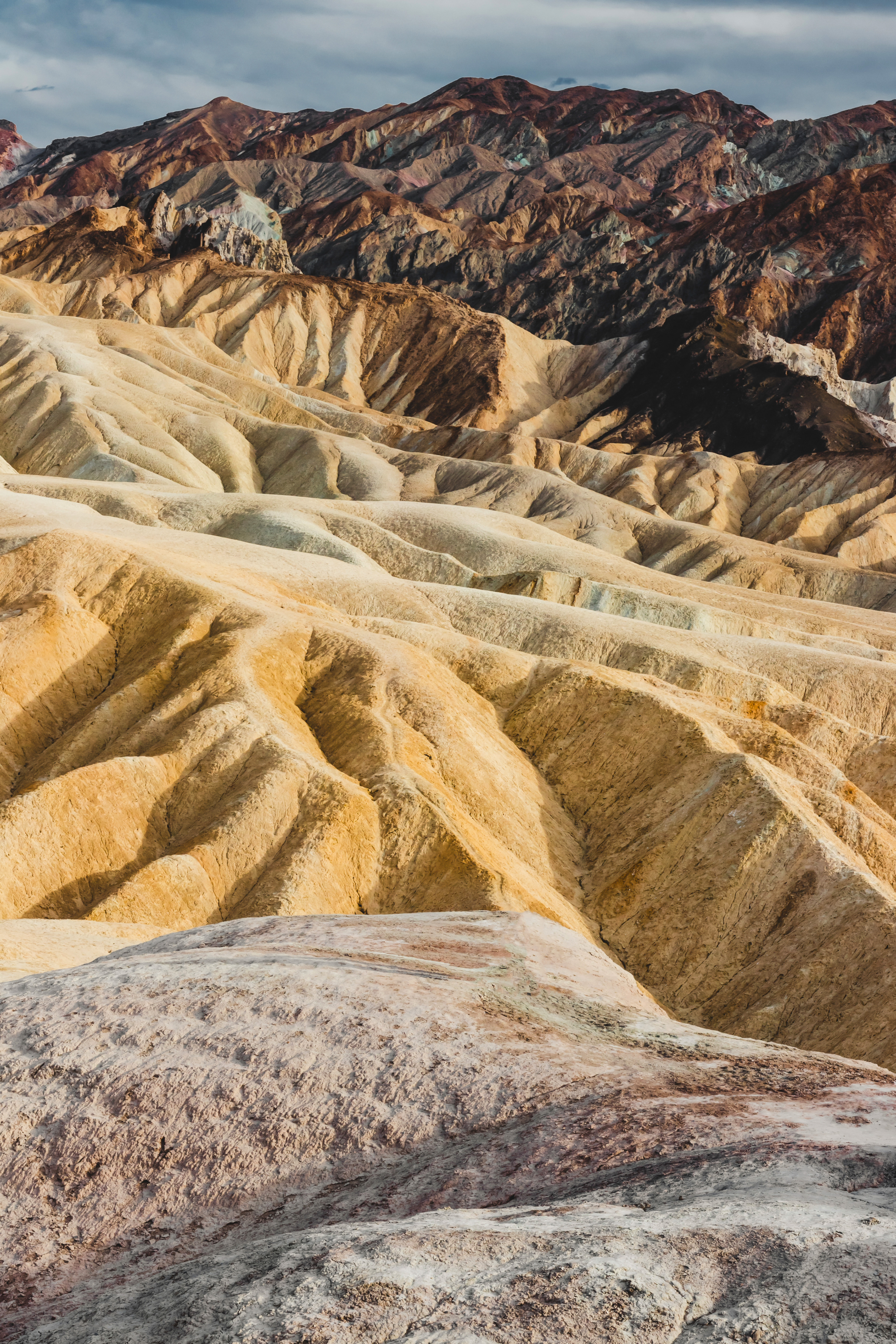
There’s a quiet magic in how the light grazes the landscape, revealing textures that feel almost lunar. Zabriskie Point blurs the line between Earth and elsewhere, inviting you to imagine worlds that might exist beyond our own. It’s a place that expands your sense of possibility simply by existing.
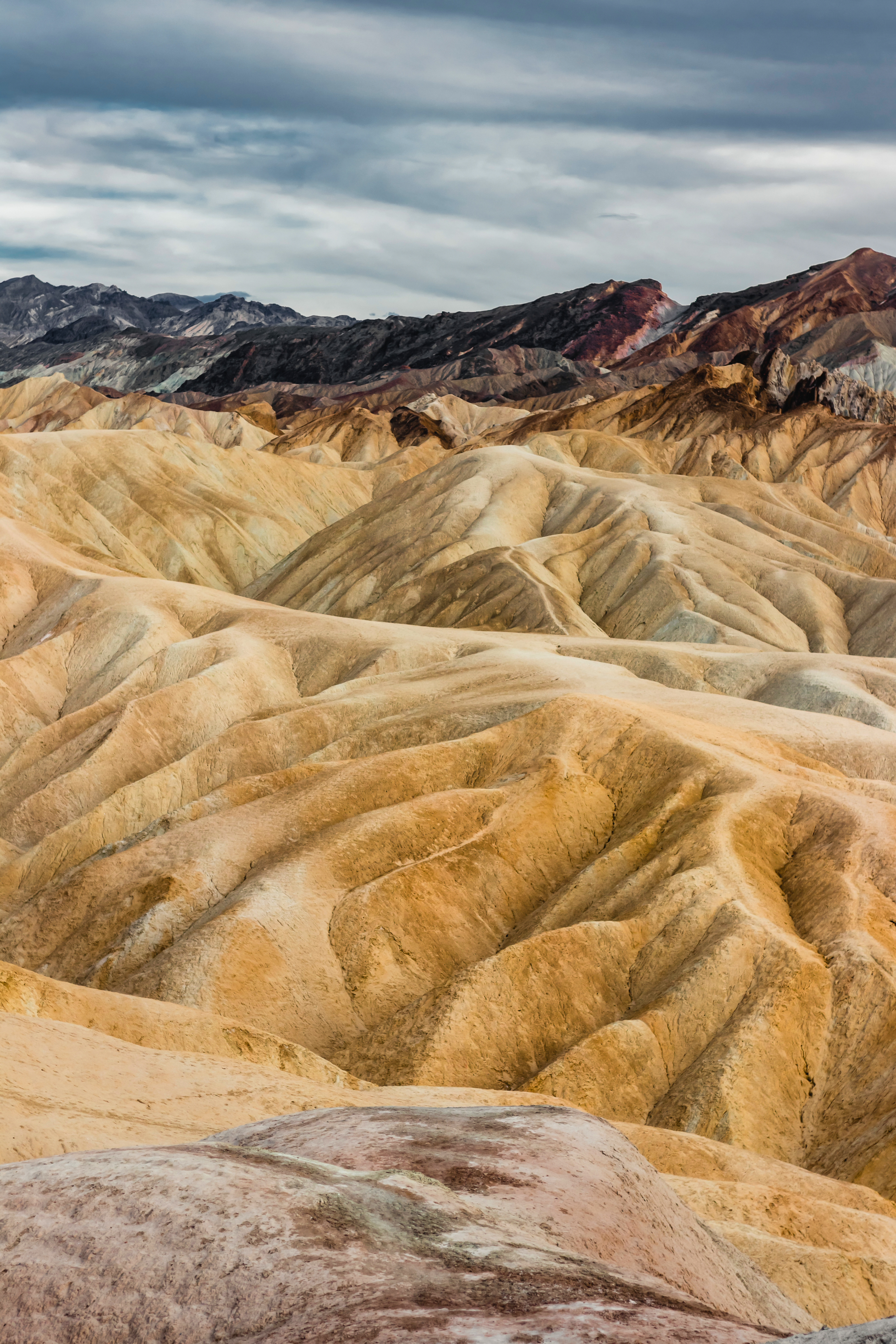
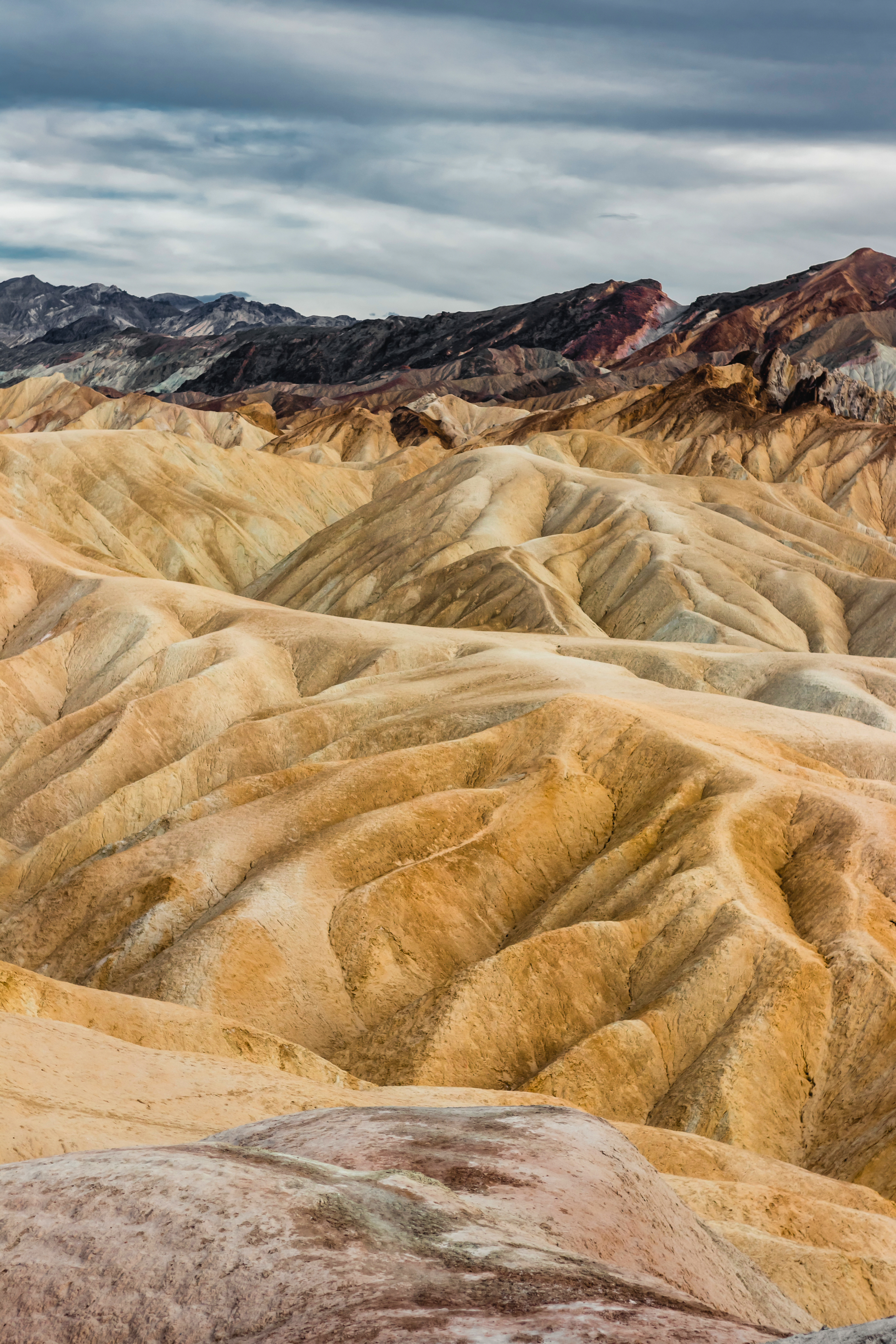
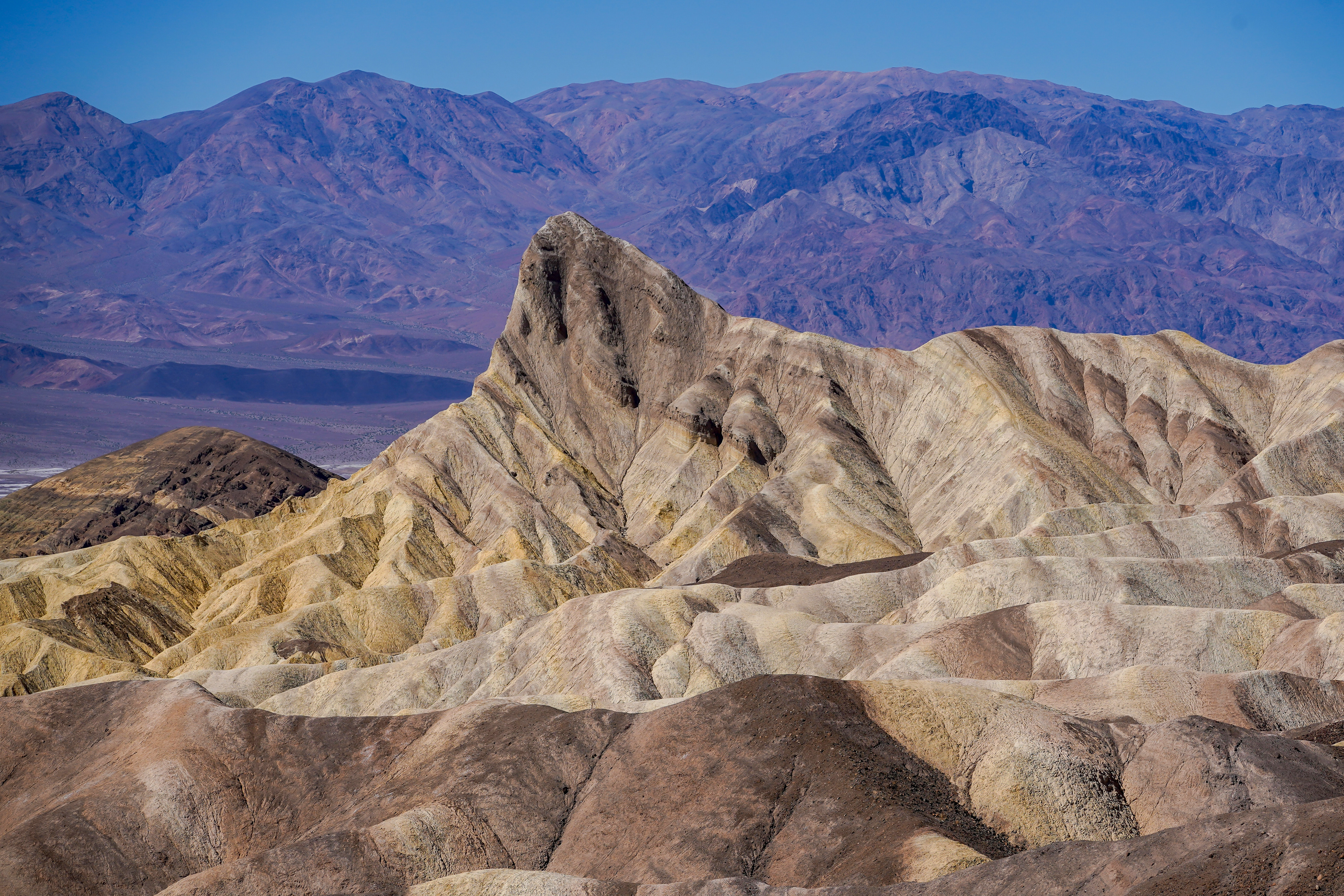
The desert’s geometry is both chaotic and precise. Every ridge seems accidental until you step back and see the pattern—an ancient choreography of wind, water, and patience. Zabriskie Point is a reminder that beauty often emerges from processes we never witness, only inherit.
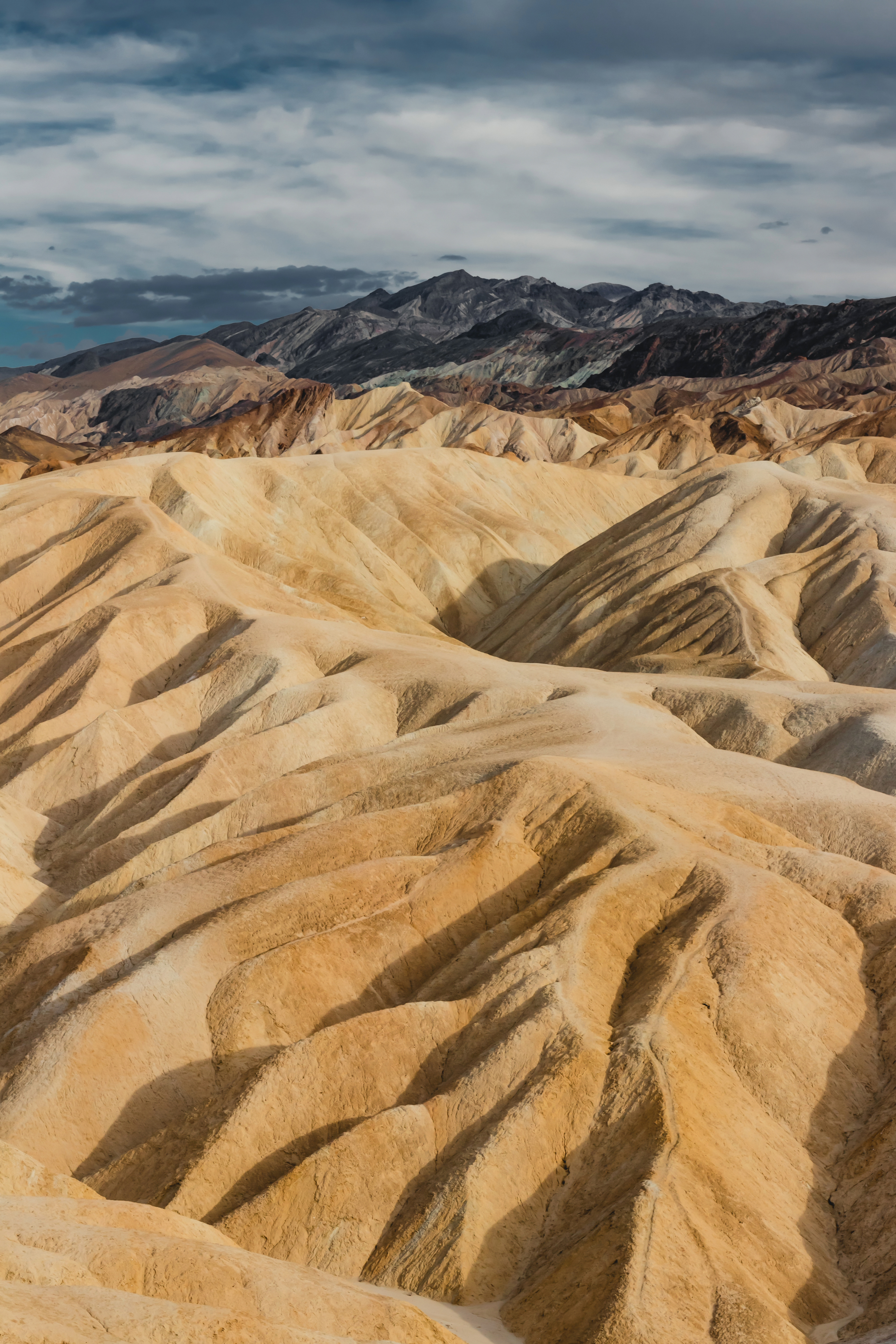
Zabriskie Point feels like a place where the Earth paused mid‑sentence. The ridges hold the rhythm of a story still unfolding, shaped by forces that moved long before us and will continue long after. Standing here, you sense the scale of time not as something distant, but as something breathing beneath your feet.
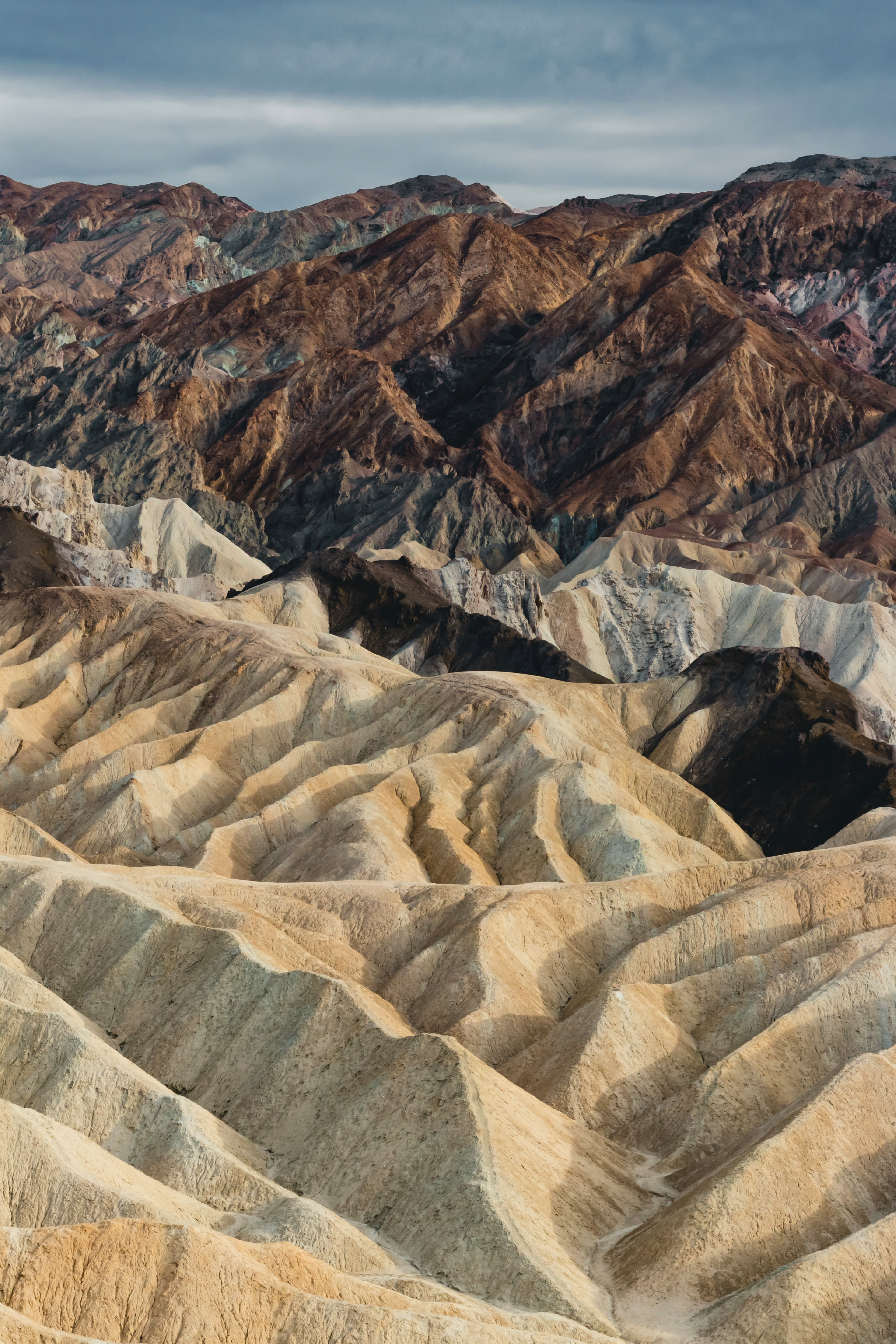
The colors here are a study in restraint—muted golds, soft browns, pale ochres—yet they carry a quiet intensity. Zabriskie Point doesn’t shout for attention; it whispers. And somehow, that whisper lingers longer than any spectacle.
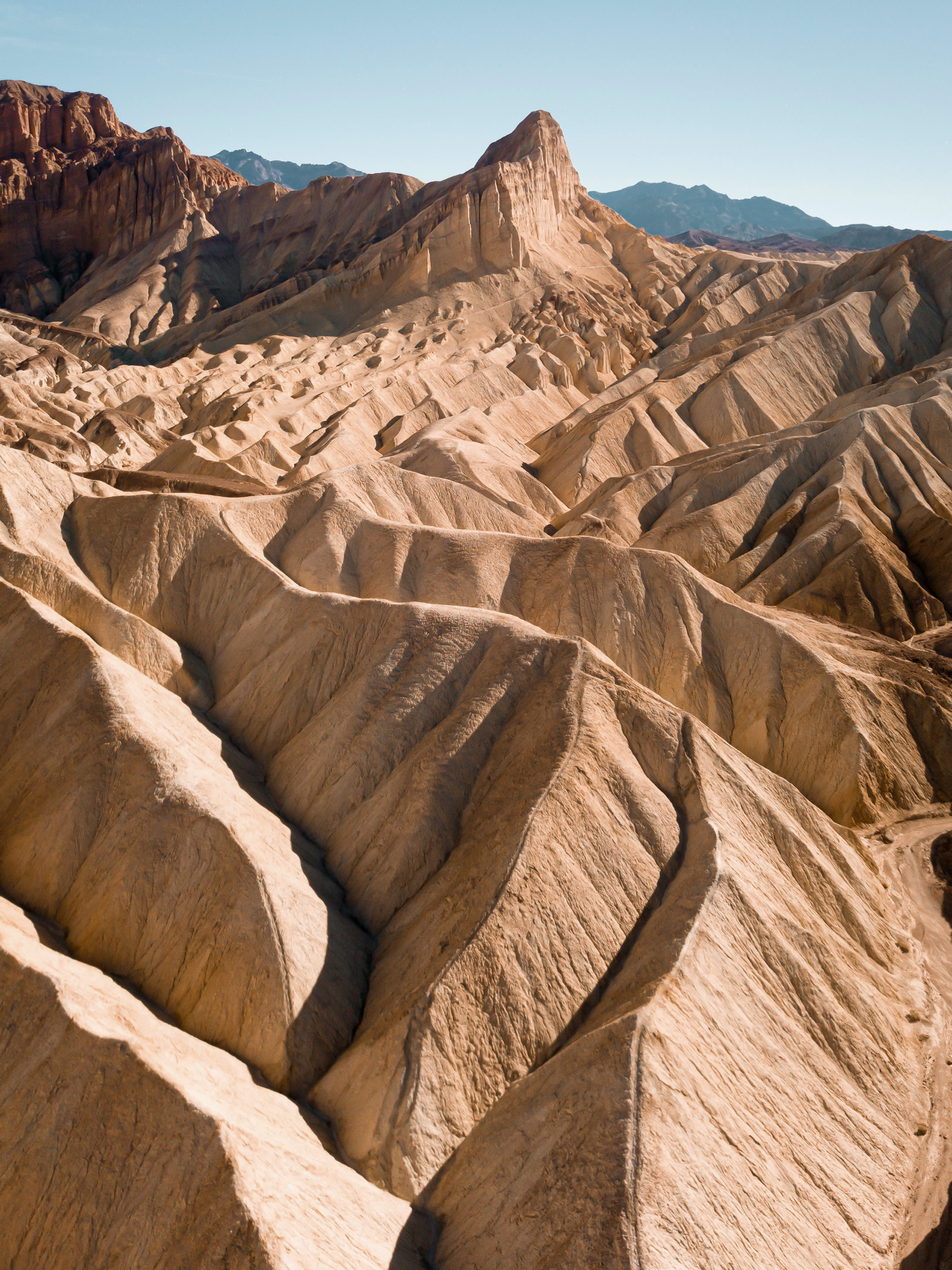
Zabriskie Point is a masterclass in minimalism. No clutter, no noise, no distractions—just form, light, and shadow in conversation. The simplicity is deceptive; the more you look, the more the landscape reveals. It’s a place that rewards attention and punishes haste.
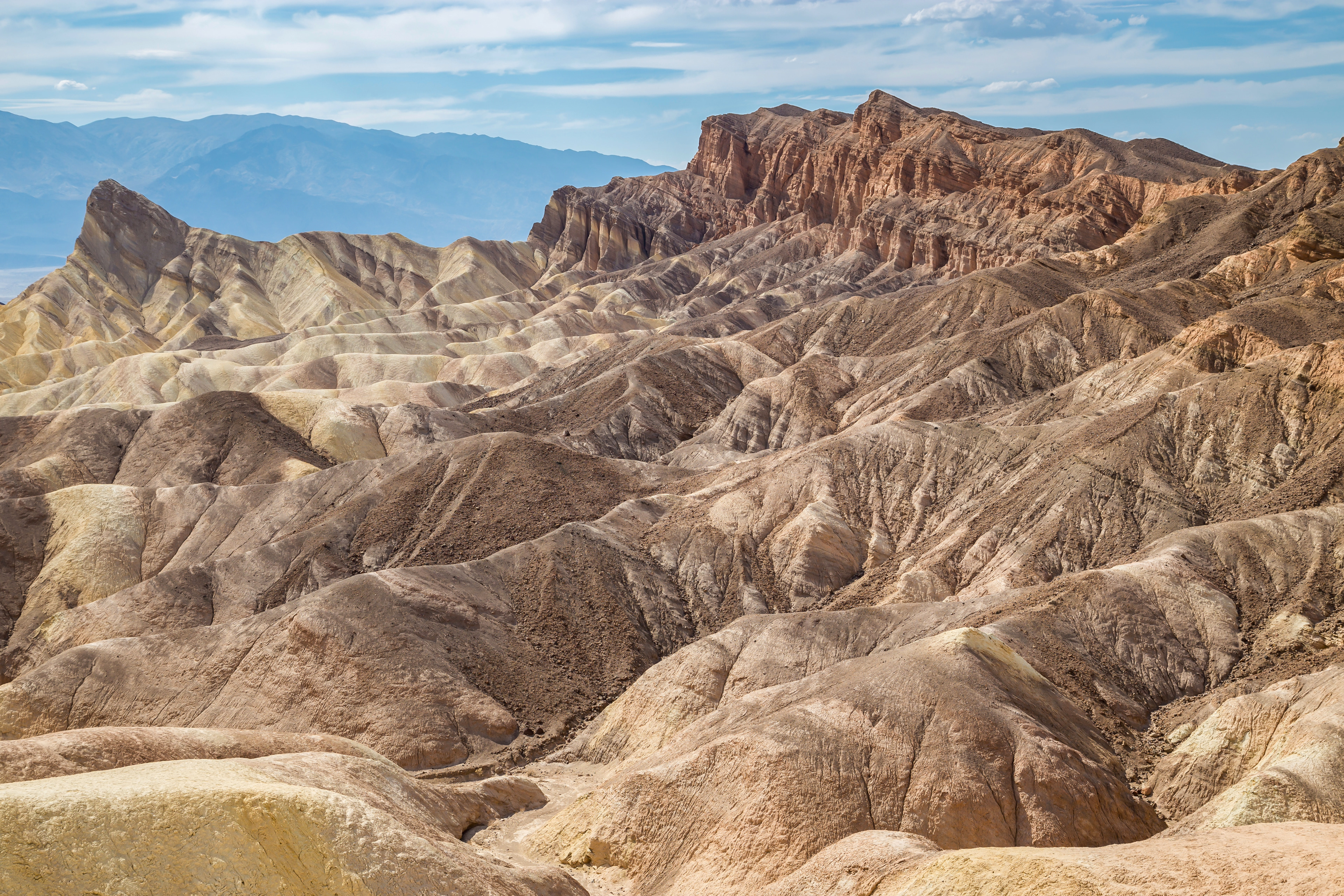
At Zabriskie Point, every angle feels cinematic. Photographing this place feels less like capturing a scene and more like documenting a feeling.